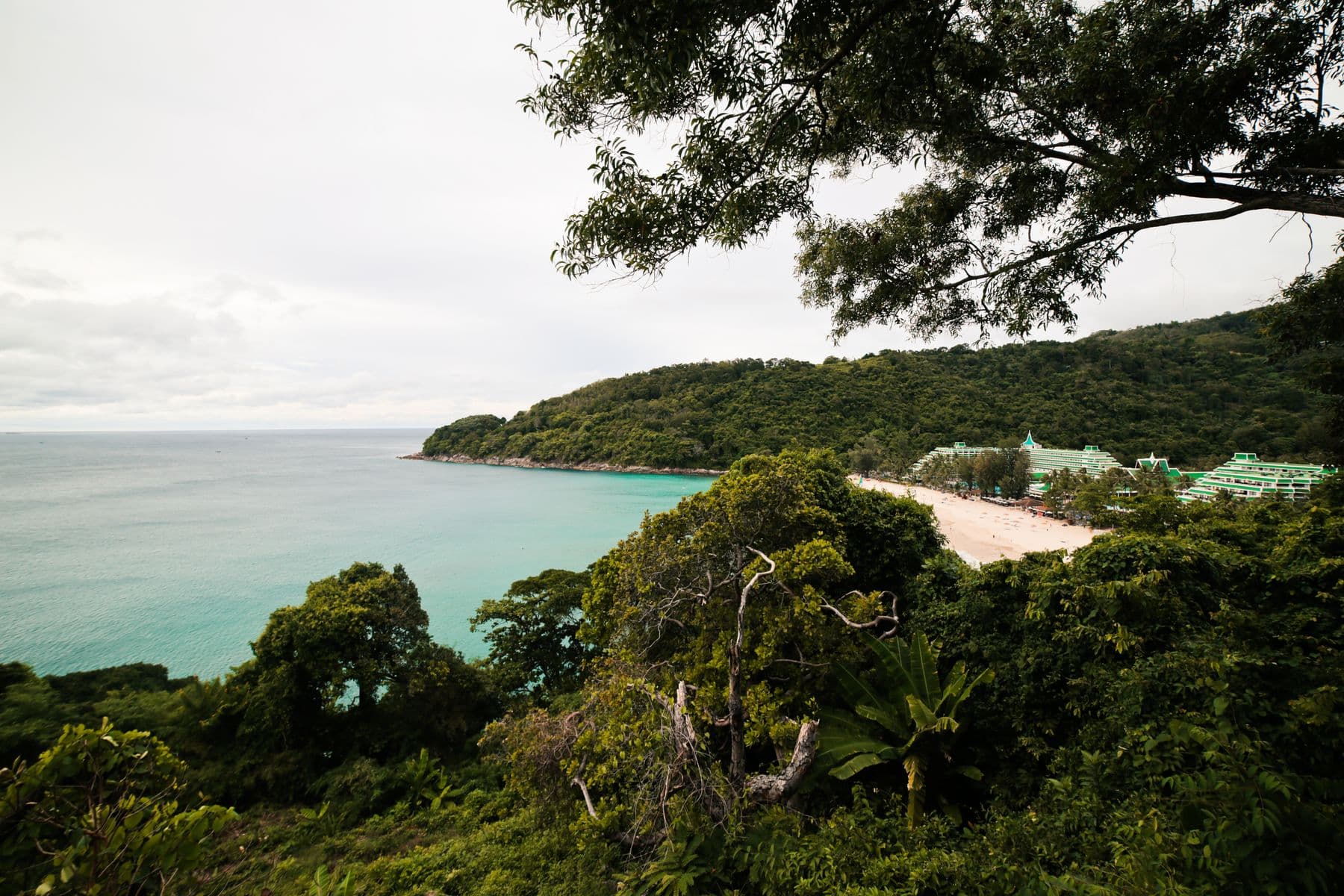
Phuket's main roads are wide and well signed, traffic keeps left as it does in Britain, Ireland and Australia, and distances on the island are short.
For driving in Thailand, the differences on Phuket are the steepness of a few hill roads and loose lane discipline.
01
Which car should you rent for these roads?
For two people staying on the west coast, rent the smallest automatic on the list: the streets behind the beach roads are narrow and no road on the island needs more power. Economy or standard covers most trips here.
When renting a car in Phuket, size up for luggage and passengers rather than for the terrain. Four adults with cases need a standard or an SUV for the boot space. Compare SUV rentals in Phuket for passenger and luggage space rather than off-road capability.
Check two things in the search rather than assuming them: a manual, if you specifically want one, and the mileage limit, which is capped on some cars and not on others. Both are stated on each car. A capped allowance matters when driving from Phuket to Khao Lak and back from a base in the south of the island.
02
How do you drive around the scooters?
Motorbikes filter down both sides, emerge from side roads without stopping and carry families.
Check your mirrors before every manoeuvre, including opening a door, and on your left in particular, because that is where motorbikes undertake. After signalling, wait a moment before moving: a signal is read as information rather than as a claim on the space.
Give scooters room and let them pass. Do not hold a lane against one that wants to get by.
03
The hill roads
Three roads on Phuket are steep. The Patong hill on Route 4029, coming over from Kathu, is the busiest. The road between Patong and Karon over the southern shoulder is narrower and has a well-used viewpoint on it. The Kata to Nai Harn stretch at the south of the island is short and tight.
All three can be driven at a sensible speed in daylight; they are harder when you are tired. If you land in the evening and your hotel is over one of them, take a transfer in and have the car delivered the next morning. On an evening arrival, a car delivered to a Patong hotel keeps you off the hill after the flight, and the delivery charge is shown on the car in the search.
Coming down, use a lower gear rather than riding the brakes.
04
Which rules are enforced?
Follow the posted speed limit, which is lower inside built-up areas and past schools and hospitals. Cameras exist on Highway 402 and roadside checks are routine, particularly on the approach to Patong.
Seatbelts are compulsory in every seat. Children under six require a proper restraint by law, and child seats can be added as an extra when you book.
The drink-drive limit is 0.05%. Police check drivers around Patong at night. Roadside checks also ask for your licence and international permit together.
The yellow-and-white kerb markings mean no parking, the red-and-white means no stopping at all, and both are enforced in Phuket Town. Because of those markings, size a car for Phuket Town for the parking rather than for the driving.
05
What changes when it rains?
Phuket's wet season runs roughly May to October, and even in high season an afternoon downpour is normal. In a downpour visibility drops hard and the road surface floods at the edges; it usually passes within the hour.
In heavy rain, slow down, put the lights on and leave a bigger gap; in a torrential downpour, pull in and wait. The drains on the main roads cope well but the beach access roads pond at the low points.
Painted road markings and metal drain covers become slippery in rain. Scooters slow down on them and are harder to see.
06
What should you check before you drive away?
The supplier hands the car over in person at whichever pickup point you chose, having confirmed the place and time with you beforehand. The same check applies whether you are collecting at the airport or having the car brought to a hotel.
Walk round it with them before you sign and photograph both bumpers, all four wheels, the windscreen and the fuel gauge. Standard cover here excludes the wheels, the glass, the underside and the interior, so existing damage in those places that is not recorded becomes your cost. The photographs are the record if the condition is questioned when you return the car.
Have the documents out rather than buried: passport, national licence, International Driving Permit and, if the car holds a deposit, the cash or card the listing asks for. Check the fuel level and the mileage limit recorded on the paperwork; the car goes back at the fuel level it left with. If the cover on the paperwork differs from the car rental insurance in Thailand you booked, raise it before you drive off.
07
Fuel and parking
Fuel stations are plentiful and attended, and take cash and usually cards. Say the amount you want in baht rather than asking for a fill. Use the fuel type stated for the car.
Return the car with the same fuel level as at collection. Photograph the gauge at both ends.
In Patong and Phuket Town the marked parking restrictions are enforced.
FAQ
Questions people ask
Road rules, checkpoints, night driving, rain and parking on Phuket.
Yes, with attention. The main roads are wide, and traffic keeps left. The two things to watch are motorbikes filtering on your left and the three steep hill roads.
The left, the same as the UK, Ireland and Australia. Drivers used to the right should start on a quiet road for the first twenty minutes and take care at junctions and roundabouts.
The posted ones, which are lower inside built-up areas and past schools and hospitals. There are cameras on Highway 402 and roadside checks are routine.
The rental conditions allow the car only on paved public roads, so keep to those. Choose a larger car for luggage and passengers.
Congestion is localised. The west coast between Patong and Kata slows badly from about four in the afternoon in high season, and Phuket Town is busy at the ends of the school day.
Harder on the smaller roads than on the main ones. Do the long journeys in daylight.
You stop, and you hand over your licence and International Driving Permit together. Checkpoints are routine, and most consistent on the Kathu side of the Patong hill road, at Karon Circle and on the approaches to Chalong Circle. Have the documents where you can reach them rather than in a bag in the boot.
Only if they are named on the rental agreement, and they have to produce what you do: their own home licence and an International Driving Permit. Anyone not named on the agreement must not drive, however short the journey. Bring the second driver's documents to the handover.
Rarely on the main roads, which drain well. The beach access roads pond at the low points during a heavy downpour and clear within the hour. If it is torrential, pull in and wait rather than pushing through standing water of unknown depth.
Ready to pick a car?
Put your dates in, and the deposit and mileage terms are stated on each car in the list that comes back.
Search cars →